

Invasive insect identified near Grafton
Article by Valerie MacDonald News Now Network/photos supplied
An invasive species, new to this part of Ontario, has been spotted south west of Grafton, says federal research scientist Chris MacQuarrie of Natural Resources Canada.
It’s the Hemlock Woolly Adelgid and it was discovered by his crew of summer students undertaking an inventory on Eastern Hemlock in the region. There were a good number of dying trees, he said.
“We didn’t expect to find it” as invasive intruder has only been in the Niagara Region and Upper New York State until now – but in early July they found the wooly adelgids in Northumberland County old growth trees. By the number of trees that had died in the area, the woolly invaders have been there for a few years, he told the News Now Network.
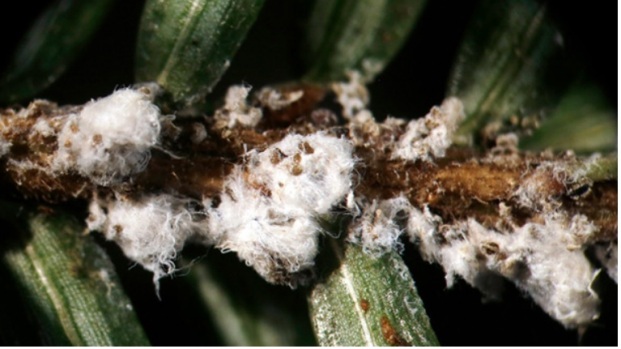
The insect infestation is characterized by a white woolly substance on hemlock tree needles (as shown in this accompanying photo) and is only harmful to Eastern Hemlocks, not other trees or plants, MacQuarrie said.
Ganaraska Region Conservation Authority Forester Gus Saurer said that most forests in this region contain Hemlock and it is a common variety.
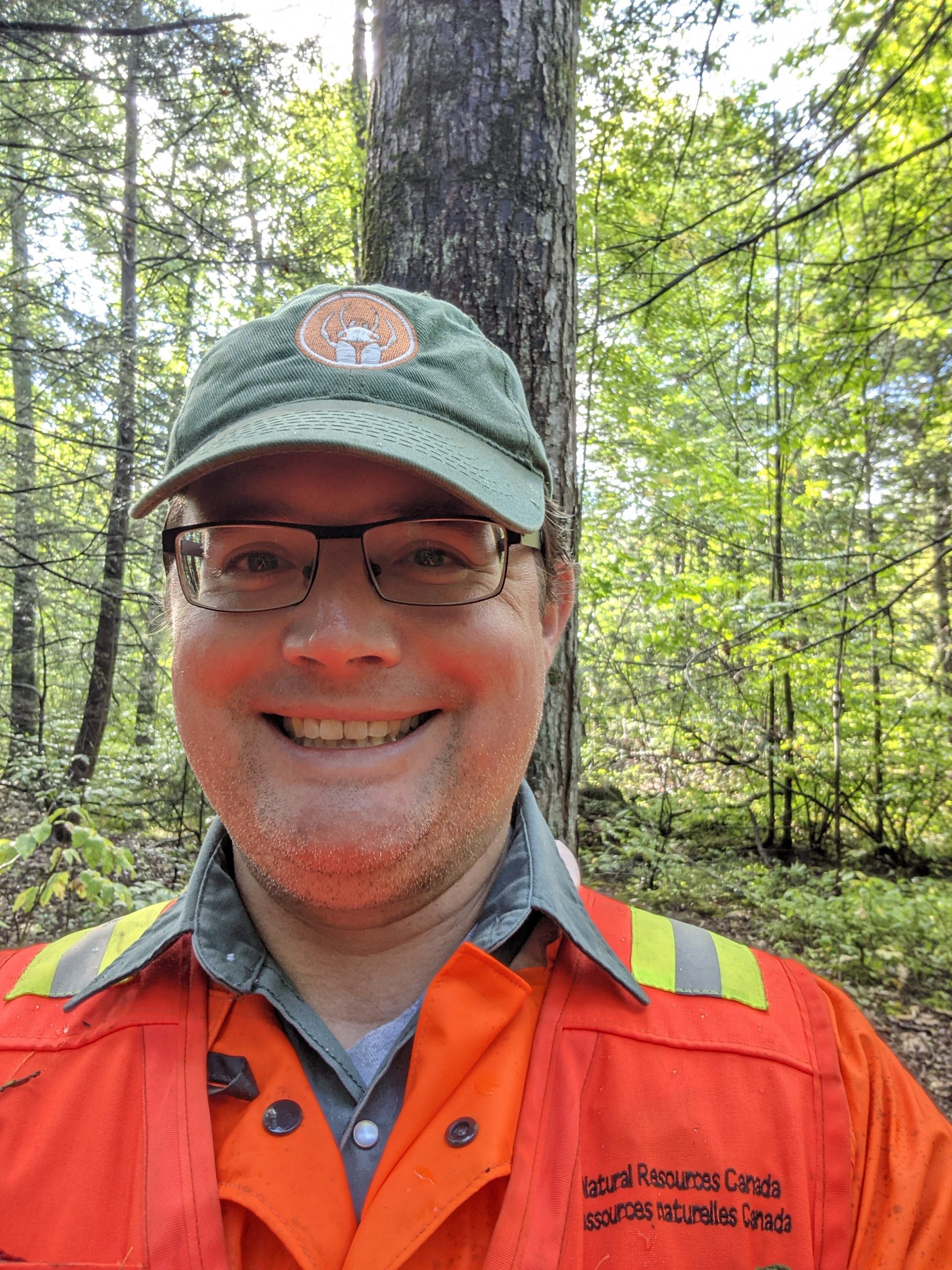
Chris MacQuarrie Natural Resources Canada
“But I have not seen any Hemlock Woolly Adelgid,” he told the News Now Network.
The chance discovery of the insect near Grafton came about because a federal inventory of hemlock trees is underway. The last survey was done in Southern Ontario in 1978, MacQuarrie said. The concern, due to the find, is that it was not expected to have spread so far from the Niagara Region.
“Hemlock Woolly Adelgid (HWA) are aphid-like insects that attack hemlock trees by sucking sap from the base of their needles, draining the trees of their energy and killing them,” states a published report. “Their egg sacks look like cotton balls or clumps of snow, making them hard to detect. HWA pose no threat to humans but are highly destructive to hemlock trees, which are used for firewood, timber and other wood products. Hemlock trees are also indicators of a healthy forest, offer shading for aquatic ecosystems in streams, help deer navigate their trails in the winter by blocking snow and are scenic fixtures in Ontario’s cottage country.”
Once an invasion takes place, the tree can die within three to five years.
An entomologist from Cornell University, Mark Whitmore, is quoted as stating “the threat is huge. Hemlock is an iconic, foundation species. It’s very important ecological and aesthetically. I’ve heard the Hemlock Woolly Adelgid described as the worst ecological disaster, after climate change.”
To fight it, pesticides can be used and individuals trees can be inoculated but this is costly.
“Biological controls could present a possibly viable and self-perpetuating alternative to chemicals – of course, just as pesticides present long-term dangers, there could be unforeseen consequences following the introduction of a “predator pest.” In New York, Cornell University scientists are raising for release a beetle from the Pacific Northwest which feeds on eggs of the HWA. If viable, this may be an excellent option, but the beetles are not widely available in sufficient numbers,” states an online article by the Cook Forest Conservancy located in western Pennsylvania.
Northumberland County’s Natural Heritage team has been monitoring developments related to Hemlock Woolly Adelgid (HWA) for several years. It is not present on Northumberland County Forest hemlocks.
#invasiveinsect, #naturalresourcescanada, #northumberlandcounty, #hemlockwoollyadelgid

Leave a Reply