
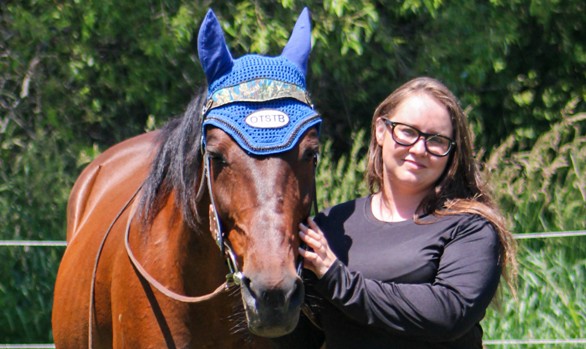
Kimberly Hale with Western Traveler (his barn name is Nugget). Image submitted (see his info below)
Trent Hills Based Charity is Reinventing Racehorses
“New Start Standardbreds” Rescues Harness Racing Horses
….saves them from slaughter houses or from situations without proper care
“I cry more when they come in than I do when … (they) leave because when they come in they’re so broken that it’s really hard to see them like that.” Kimberly Hale, New Start Standardbreds
Article by John Campbell/Photos submitted
Trent Hills - Not all race horses get to live out their days in a pasture after being retired from competition.
Many are sent to the slaughterhouse. New Start Standardbreds’ mission is to spare them that fate by finding new homes for the horses and giving them a new purpose in life.
It rescued 16 the first year it started, in 2020. A year later the number had ballooned to 36.
Despite a shoestring budget of roughly $15,000 built entirely on donations and fundraisers, the Trent Hills-based registered charity has set a goal of 40 rescues this year, but “I have a feeling that number will grow as long as there’s ability’ to do so, said New Start’s president, Kimberly Hale.
“There is a lot of horses out there that need help…we also take horses from owner surrenders who want to find them safe and suitable homes as well.”
Hale, who grew up around standardbreds – they’re the horses that pull two-wheeled carts and a driver in harness racing – joined a rescue program in 2014 that saved the animals from the butcher’s block by retraining them to be riding horses after their retirement.
She quit doing volunteer work in 2019 but people kept contacting her about finding homes for horses so she, some friends and other volunteers launched New Start.
Contacts are made through word of mouth and social media, with people reaching out for help in arranging rescues, Hale said.
“We also get a decent number of our horses from auctions” held in the United States, she added. “We’re not bidding on them directly, they’re being bought privately from the dealers,” to be returned to Canada, where they started out originally.
New Start works with the Standardbred Retirement Foundation in the U.S. to make it happen.
Hale said there’s a stigma attached to standardbreds that leads to their being “discarded” after they’re no longer fit for racing.
“People don’t want them as riding horses because they were cart racers and … have the pacing gait,” making them “not as well wanted as a thoroughbred or a quarter-horse,” she said.
They’re also “plain,” being either bay or brown in most instances, “so they don’t get the attention that a paint horse or an appaloosa would.”
Hale is a big fan, however.
” I love this breed and I want them to be able to succeed once they’re done racing,” she said.
“Our goal is to reinvent how people see them,” and make them realize they can also do well as “an off-the-track horse, as a trail horse, as a competitive horse, as a pleasure-driving horse, all of those things.”
Most of the horses the organization handles are between 12 and 20 years old, Hale said.
There’s no limit on age or whether “they’re sick, lame, any of that. Those seem to be our specialty.”
“The majority of the ones that we get typically go on to be trail horses,” Hale said, because they’re “excellent” at it.
“They’re a very smart breed … very level-headed.”
Some horses do compete in shows and jumping competitions “but the majority of the ones that we get usually are coming with some lumps and bumps and a little bit of lameness issues, so they do best on the trails.”
The facility where New Start rents stalls from includes two large pastures and lots of access to trails to train the horses.
“I have seven stalls and I never like to have more horses than stalls,” said Hale, an executive assistant at Community Living who does chores every day after work.
The “rehab horses” that end up at the facility were about to be shipped to slaughter or were in “a situation where they were no longer being cared for properly.”
Details on how to adopt a horse or to provide foster care are posted on the charity’s website, www.newstartstandardbreds.com.
An application must be filled out before the horses can be seen in person, Hale said. “It helps us to narrow down those viewings to make sure that it’s a good potential match for horse and human.”
“We don’t really have a fancy facility so I don’t expect the adopters to have a fancy facility,” she said. Her main concerns are that a horse is safe and is looked after by someone who “cares and is going to give them the necessities that they need.”
When those criteria are met, “some very major transformations” take place in animals that have “lost their personalities … because they’ve been beaten down, they’re scared, they’re confused, they don’t know what’s going to come next,” Hale said.
“I cry more when they come in than I do when … (they) leave because when they come in they’re so broken that it’s really hard to see them like that.”
Her reward as a volunteer is to have horses “come out of their shell” and connect with people.
To see them “enjoy life again is a big thing,” she said.
Hale said people who adopt horses are looking for the “enjoyment” they provide and the friendship they offer.
“Horses are almost like therapy animals because they’re very good at reading people. They know when you’re happy, they know when you’re sad, they know when you need a hug, they know when you need to be left alone. They can read body language so easily,” she said.
Hale is “extremely passionate” about what she does., but the role she’s taken on “gets harder every day” because the racing industry has been hurt by COVID-19 and reductions in government funding.
New Start doesn’t receive government funding and “that’s a big problem,” Hale said.
“If we had $50,000 we could save twice as many horses per year — four times as many, really, … There should be a lot more done to ensure these horses have a safe place to go when they’re done racing.”
Here are stories about some of the horses rescued:
“NOT MY MAN”
“NOT MY MAN”
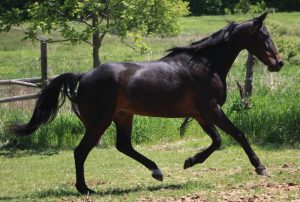
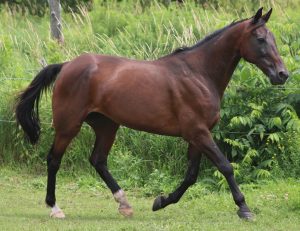
We got Neo in March 2021 where he had been tagged to ship for slaughter and was thankfully rescued. He spent the first two months of his “time” with us on stall rest with limited access to exercise because he had a severe hind leg tendon injury. Once the injury healed, he was allowed turnout however because of the injury, he would never be able to be ridden so he was simply a companion. He was successfully adopted in June 2021 as a companion for another horse who needed a pasture friend! He now lives up in the Kingston area.
“MOONLIT TORI”
“MOONLIT TORI”
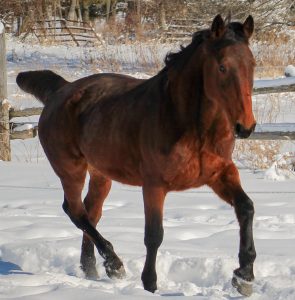
Tori arrived at the end of June 2021 from a neglect and abandonment situation. Her owner was no longer able to care for her financially and the property where she was living was unable to continue providing care. She does have arthritis in her knees and pelvis, and has a permanent pelvic misalignment from an old injury of some type. She is a very opinionated and feisty lady who is our “herd leader”. At one time she was clearly abused because she does get leery of certain people and strangers. She has been looking for a home since last fall, however she hasn’t had any interest in her at all. Her family is out there though who will overlook her personality quirks, we are sure of it!
“HUDSON GAL”
“HUDSON GAL”
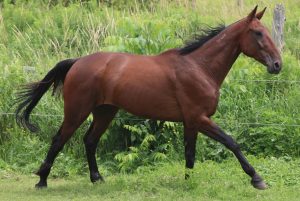
Karry is an owner surrender who had a very successful race career and then went on to be a successful broodmare (mom) as well. She had 5 babies and her owners decided it was time for her to have a new career path, so they reached out and asked us to find her a home! She is currently here learning the ropes of being a riding horse and awaiting her family to come along. She already has multiple interested applicants, so we suspect she will be heading off to a new home soon!
“IDONTWANABEFRIENDS”
“IDONTWANABEFRIENDS” (Taco)
Taco is a massive boy (over 17 hands) who arrived to us in July 2021 after being tagged to ship to slaughter. He arrived terrified of humans and weighing only just over 700lbs. It took a long time to gain his trust and show him that people are not going to hurt him any longer. He has severe scarring and multiple neuromuscular strains/tears from what we suspect was some form of accident. He has come a long way from when he arrived but still has a long way to go before he is completely comfortable and sound again. We have hope that he will eventually be able to learn how to be a trail horse. He is available for adoption but because of his fear of strangers and his current therapy needs, he will only be adopted to an experienced and understanding home! Until then, we will do whatever we can to keep making him sound and happy.
Feature Photo:
**Kim Hale with Nugget. Here is his story -“He is a 16-year-old gelding named Western Traveler (his barn name is Nugget). I got him 4 years ago when he was being given away because he had a severe leg injury and no one wanted him. I took him in to rehabilitate and then rehome him, except I ended up connecting with him and he chose me as his person; so he became a permanent member of our family. I also own a 16-year-old mare named Houchiegouchiemama (barn name is Hooch), who I’ve had for over 10 years; our family originally bought her as a racehorse and when she retired, she became my riding partner.”
Editor’s Note: People can donate, sponsor a horse, adopt and also foster a horse. Volunteers are also needed to make this work.